
1. CE is a framework, not a sales passport
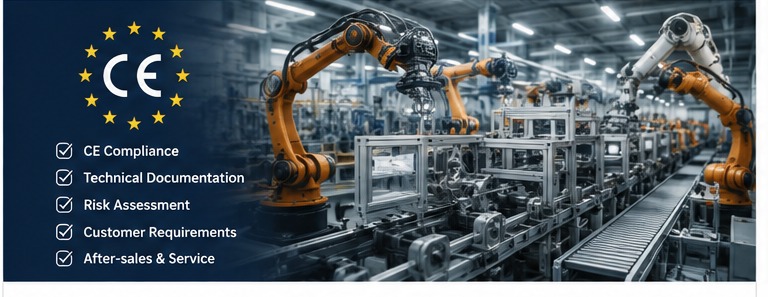
Depending on the product, manufacturers may need to identify applicable EU legislation, complete conformity assessment, prepare technical documentation and risk assessments, issue declarations and apply required marking. But CE does not guarantee customer acceptance.
2. Documentation can determine project acceptance
Poor translations, inconsistent manuals, missing declarations or unclear safety documentation can delay acceptance even when the machine itself is technically sound.
3. Customer standards may go beyond the law
Automotive, battery and other industrial customers often impose project-specific standards, approved components, safety concepts and acceptance procedures.
4. Installation creates a second layer of execution risk
Once equipment arrives, the challenge changes: installation, commissioning, subcontractor coordination, site safety, documentation and escalation all need to work.
5. After-sales capability affects the buying decision
German B2B customers are not only buying machinery; they are buying confidence that someone will respond when production is interrupted.
6. Localization is more than translation
A German manual and local phone number help, but true localization means connecting Chinese engineering capability with German customer expectations.
Final thought
Successful market entry is not one isolated legal or sales decision. It is the coordinated design of organization, compliance, customer execution and local capability.